
Everything You Need to Know About Door Glass for Cars

A car door window looks simple until it stops moving, shatters, leaks, whistles on the highway, or refuses to seal in a rainstorm. Door glass does more than let fresh air in. It helps protect the cabin, supports visibility, reduces noise, works with the window regulator, and can affect comfort every time you drive.
Door glass for cars includes the movable side windows in the front and rear doors. In many vehicles, it also works alongside fixed side pieces, seals, channels, clips, and electric motors. When one part fails, the problem may look like “bad glass,” even when the real issue sits inside the door.
This guide covers the main types of car door glass, common problems, replacement basics, safety details, and what to know before repair.

What car door glass is designed to do
The most obvious job of door glass is visibility. Side windows help drivers check mirrors, scan intersections, see traffic, and park safely. Clear glass also matters at night, in rain, and when headlights reflect off smudges or scratches.
Door glass also helps with:
Weather protection
It keeps rain, wind, dust, and road spray out of the cabin.
Passenger security
A closed side window adds a barrier against theft and outside contact.
Cabin comfort
Good glass and seals reduce wind noise, drafts, and water leaks.
Vehicle appearance
Scratched, cloudy, cracked, or mismatched glass can make a car look neglected.
Window operation
The glass must move smoothly through tracks and weatherstripping. If it binds, tilts, or drops, it can damage the regulator or motor.
Most people only notice door glass when it fails. A slow window, rattling sound, or sudden breakage can turn a normal errand into a repair job.
The main types of glass used in car doors
Not all automotive glass is made the same way. Side door windows are usually made from tempered glass, laminated glass, or a specialty version of one of those.
Tempered glass is common in side windows
Tempered glass is heat-treated to make it stronger than regular glass. When it breaks, it usually crumbles into many small pieces rather than large sharp shards. This is why a broken side window often leaves tiny glass cubes across the seat, carpet, and door pocket.
Tempered glass has long been common in vehicle door windows because it is strong, light, and relatively practical to replace. It also breaks in a way that can help reduce the risk of long, jagged pieces.
The downside is that tempered glass usually cannot be repaired once cracked. A chip or crack in a tempered side window often means replacement.
Laminated glass is becoming more common
Laminated glass has two layers of glass with a plastic interlayer between them. Windshields have used laminated glass for many years. Some newer vehicles also use laminated glass in front or rear door windows.
Laminated side glass can help with sound reduction, security, and keeping glass together after impact. Instead of scattering everywhere, the broken pieces may stick to the inner layer.
It can also change the replacement process. Laminated side glass may cost more than standard tempered glass, and the correct part matters because thickness, tint, and fit can vary.
Privacy glass and factory tint are different from film tint
Many SUVs, trucks, and crossovers have darker rear side windows from the factory. This is often called privacy glass. The dark color is built into the glass itself.
Aftermarket tint film is different. It is applied to the inside of the glass. If the door glass is replaced, any film on the old window does not carry over. New film must be installed separately, and it should meet local tint laws.
Factory privacy glass and aftermarket tint can look similar, but they are not the same product.
Parts that work with door glass
A side window is only one part of the system inside the door. If the window does not move correctly, the glass may not be the problem.
Key parts include:
Window regulator
This mechanism raises and lowers the glass. It may use cables, arms, tracks, or a compact mechanical assembly.
Window motor
In power windows, the motor drives the regulator. A weak motor may work slowly, stop halfway, or fail completely.
Glass run channel
This rubber-lined track guides the glass as it moves up and down.
Weatherstripping
Seals around the door and window help block water and wind.
Mounting clips or brackets
These hold the glass to the regulator. If they break, the glass may tilt, drop, or come loose.
Switches and wiring
A failed switch, damaged wire, or blown fuse can act like a bad motor.
A window that slides down into the door often points to a regulator, clip, or bracket problem. A window that stays shut and makes no sound may involve the switch, fuse, wiring, or motor.
Common problems with car door glass
Door glass problems usually fall into a few patterns. The symptoms can help narrow the cause.
The glass is cracked, chipped, or shattered
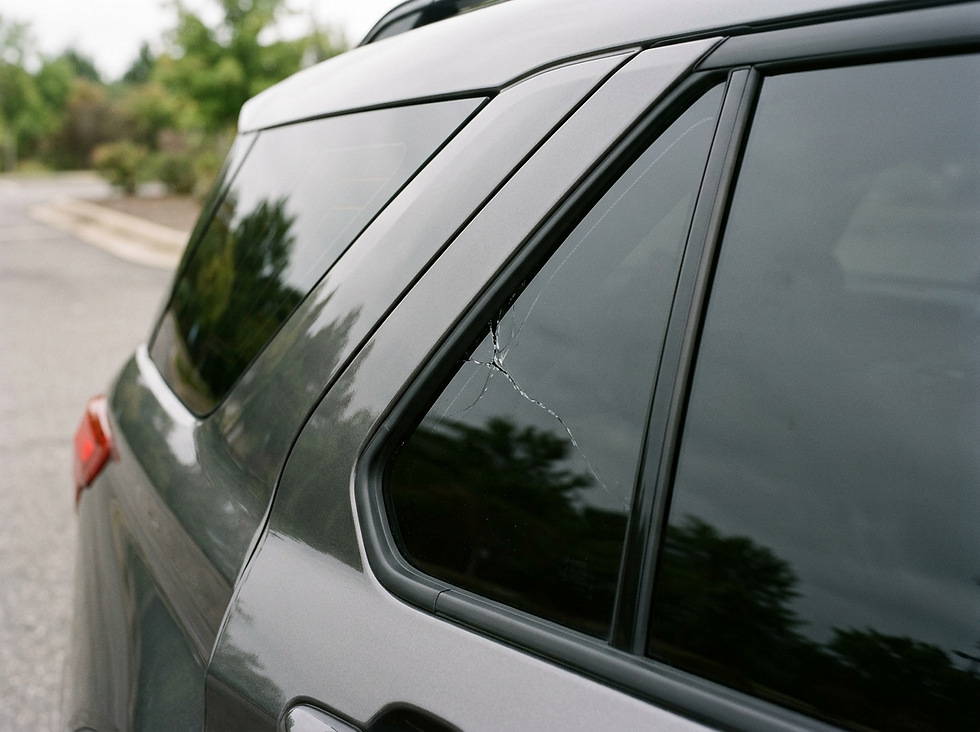
Side windows can break from road debris, attempted theft, impact, sudden pressure, or stress around the edges. Tempered glass may appear fine one moment and collapse the next if it has hidden edge damage.
A shattered side window needs prompt replacement. Leaving the opening covered with plastic is only a short-term measure. Plastic sheeting can flap, leak, reduce visibility, and make the vehicle less secure.
The window moves slowly or unevenly
Slow movement often points to worn regulator parts, dry window channels, weak motors, or glass that is binding in the track. Cold weather can make the issue more obvious because rubber seals become stiffer.
If the glass tilts forward or backward while moving, stop using the power window if possible. Forcing it can bend parts or crack the glass.
The window falls into the door
This is a classic regulator or clip failure. The glass may disappear into the door, sit crooked, or refuse to stay up. The repair usually requires removing the interior door panel, securing the glass, and replacing the failed hardware.
Driving with the glass loose inside the door can make the damage worse. It can also create loud rattles and scratch the glass.
Wind noise appears at highway speed
A whistle, hiss, or flutter near the door can come from worn seals, misaligned glass, damaged channels, or a door that does not close flush. Even a small gap can become noisy at speed.
Wind noise can also show up after a previous repair if the glass was not aligned correctly.
Water leaks into the cabin
Water near the door panel, carpet, or speaker area can come from a bad seal, clogged drain holes, damaged vapor barrier, or misaligned glass. Doors are designed to handle some water inside the outer shell, but that water should drain out through openings at the bottom.
If the drains clog, water can collect and enter the cabin.
Can door glass be repaired or does it need replacement?
Windshield chips are often repairable. Side door glass is different.
Tempered side glass usually needs replacement if it cracks or breaks. It is not normally repaired because of the way it is manufactured and how it fails. Laminated side glass may sometimes have repair options for small damage, but replacement is still common if the damage affects visibility, structure, or window movement.
Use this simple guide:
Problem | Likely fix |
Shattered tempered side window | Replace the glass |
Crack in movable door glass | Replace the glass |
Window stuck but glass is intact | Diagnose regulator, motor, switch, or wiring |
Glass tilts or drops | Repair regulator, clips, or brackets |
Wind noise with intact glass | Inspect seals, channels, and alignment |
Scratches from worn guides | Replace damaged parts, and replace glass if visibility is affected |
A technician may also need to clean broken glass from inside the door. Small pieces can hide in the bottom of the door shell and rattle for months if left behind.
What happens during door glass replacement
The exact process depends on the vehicle, but most replacements follow a similar path.
First, the trim panel comes off the inside of the door. This gives access to the regulator, brackets, wiring, and glass mounting points. If the window shattered, the technician removes loose glass from the door, seat, floor, and surrounding trim.
Next, the old glass or broken pieces are removed from the regulator. The new glass slides into the channel and attaches to the regulator or mounting brackets. The technician then checks alignment, raises and lowers the window several times, and makes sure the glass seals at the top.
A good replacement should leave the window:
Moving smoothly without grinding or popping
Sitting level in the opening
Sealing tightly when fully closed
Free from new rattles inside the door
Matching the original tint and shape as closely as possible
If tint film is needed, it is usually handled after the new glass is installed.

OEM and aftermarket door glass
Replacement door glass may come from the original equipment manufacturer or from an aftermarket glass maker. Both can work well when the part fits the vehicle correctly and meets safety standards.
OEM glass is made to match the vehicle’s original specifications. It may be preferred for newer vehicles, luxury models, leased vehicles, or cars with special acoustic or laminated glass.
Aftermarket glass can be a practical replacement and may cost less. Quality varies, so fit, thickness, tint, edge finish, and markings matter.
The right choice depends on the vehicle, insurance coverage, availability, and whether the window has special features. Some door glass may include acoustic layers, solar control, factory tint, antenna elements, or specific markings.
If a vehicle has laminated acoustic side glass from the factory, replacing it with a basic tempered window can change noise levels and may not match the other side.
What affects the cost of replacement
Door glass replacement cost can vary widely. A basic movable side window on a common sedan is usually simpler than a laminated, tinted, or specialty window on a newer luxury vehicle.
Main cost factors include:
Vehicle make, model, and year
Front door glass versus rear door glass
Tempered glass versus laminated glass
Factory tint, privacy glass, or acoustic glass
Availability of the part
Labor needed to remove the door panel
Broken glass cleanup
Regulator or motor damage found during the repair
Mobile service versus shop service
Insurance deductible and glass coverage
Sometimes the glass is not the expensive part. Labor can increase if the door panel is complex, clips are fragile, or the regulator also needs work.
Before approving the repair, ask whether the estimate includes cleanup, new clips if needed, testing, and disposal of broken glass.
Safety and legal details to know
Door glass affects visibility and safety, so the replacement should match the vehicle properly. Poorly fitted glass can leak, rattle, bind, or leave gaps at the seal.
Tint rules also matter. In the United States, window tint laws vary by state. Front side windows often have stricter visible light transmission requirements than rear side windows. If new glass receives aftermarket tint, it should follow the rules where the vehicle is registered and driven.
Drivers should also avoid placing stickers, opaque film, or damaged accessories where they block side visibility. Clear views out of the front side windows help with lane changes, turns, pedestrians, cyclists, and emergency vehicles.
If a side window breaks while driving, slow down safely, keep both hands on the wheel, and pull over when it is safe. Avoid touching loose glass with bare hands. Small tempered pieces are less dagger-like than regular glass, but they can still cut skin.
How to care for car door glass
Good habits can help the glass, seals, and regulator last longer.
Clean the glass with an automotive glass cleaner and a clean microfiber towel. Avoid harsh scrubbing on tinted film because it can scratch or peel. If the inside of the window has aftermarket tint, use a cleaner that is safe for film.
Keep the lower window seals free of grit. Dirt trapped along the belt molding can scratch the glass as it moves up and down. If the window squeaks, drags, or leaves vertical marks, the channel may need cleaning or inspection.
Do not force a frozen window. In cold weather, ice can bond the glass to the seal. Pressing the switch repeatedly can strain the regulator or motor. Clear ice first and give the cabin time to warm.
Pay attention to early warning signs:
New rattles inside the door
A window that moves slower than the others
Clicking, popping, or grinding sounds
Water streaks inside the glass
Wind noise after the door closes
Glass that stops slightly below the top seal
Small problems are often easier to fix before the glass drops or the regulator fails completely.
The best next step when something goes wrong
When door glass breaks, the priority is to protect the cabin and restore safe visibility. Covering the opening may help for a short time, but proper replacement is the real fix. When the window stops moving, avoid forcing it. The glass, regulator, motor, and seals all need to be checked as a system.
The best repair is the one that matches the original glass, restores smooth movement, seals out weather, and leaves no hidden glass rattling in the door. A clear, quiet, secure side window is easy to take for granted, and that is exactly how it should feel when the job is done.


Comments